
Why Supermarket Herb Pots Die in Small Apartments
Discover why supermarket herb pots fail indoors—and learn practical ways to grow fresh kitchen herbs in small, low-light apartments.
The Light Problem Is Bigger Than It Looks
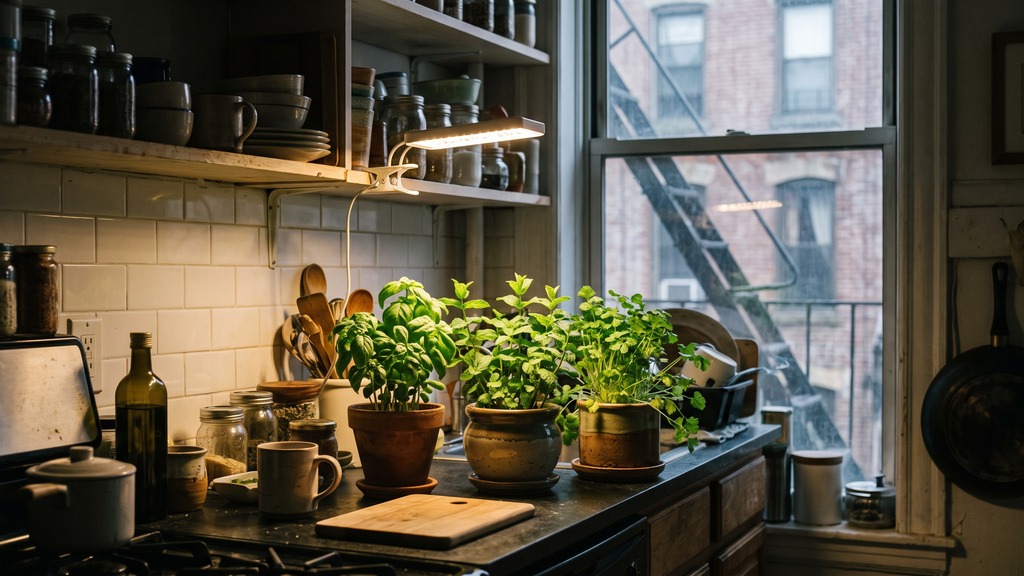
That cheerful supermarket basil may look healthy under bright store lighting, but your apartment kitchen often provides a very different environment. Herbs such as basil, coriander, parsley, and mint need substantial light to produce strong leaves. A north-facing window, shaded sill, or winter sun may not provide enough intensity, even when the space appears bright to human eyes. Low light causes slow growth, pale leaves, long weak stems, and greater vulnerability to disease.
Distance matters, too. Light drops sharply just a few feet from a window, while nearby buildings, blinds, and seasonal changes can reduce exposure further. A countertop herb pot may receive only a fraction of the light it experienced in the store. Rotating the pot, moving it closer to a sunny window, or adding a clip-on LED can help, but the improvement must be consistent. For renters with limited space, reliable supplemental lighting is often more practical than repeatedly replacing plants that never receive enough energy to thrive.
Transplant Shock and Crowded Roots Create a Fragile Start
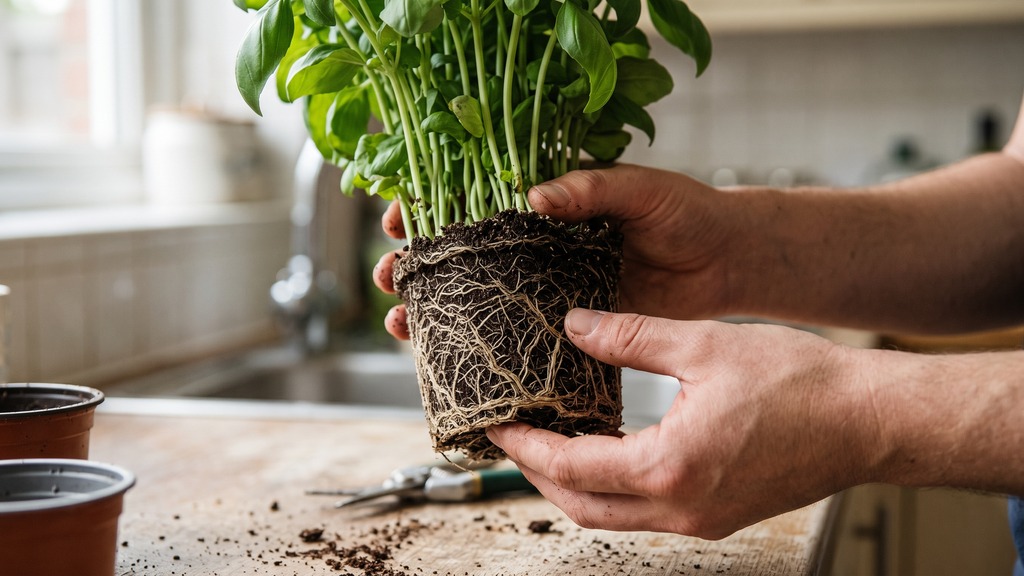
Supermarket herb pots are usually designed for quick sale, not long-term indoor gardening. Several seedlings may be packed tightly into one small container so the pot appears full and harvest-ready. Their roots compete for water, nutrients, and space almost immediately. Once the foliage becomes dense, air circulation also declines, increasing the risk of yellowing leaves, fungal problems, and weak growth.
Moving the plant from a bright, carefully managed commercial environment into a dry apartment can trigger transplant shock. Even when the pot is not physically replanted, the change in temperature, humidity, light, and watering routine stresses the herbs. Roots may already be circling the container or pressed into a compact growing medium that dries unevenly. Dividing the seedlings into larger pots can improve their chances, but delicate roots may suffer during the process. For urban gardeners, choosing appropriately sized plants or growing from replaceable herb pods can reduce overcrowding and create a more predictable start.
Quick Fixes Help, but Consistency Is the Real Solution
Some plant care changes can extend an herb’s life. Trim damaged leaves, harvest gradually rather than stripping the stems, and check the soil before watering. Water thoroughly when the surface begins to dry, then allow excess moisture to drain. Avoid placing herbs beside radiators or cold, drafty windows. These quick fixes address symptoms, but they cannot fully solve insufficient light, undersized containers, or an unpredictable schedule.
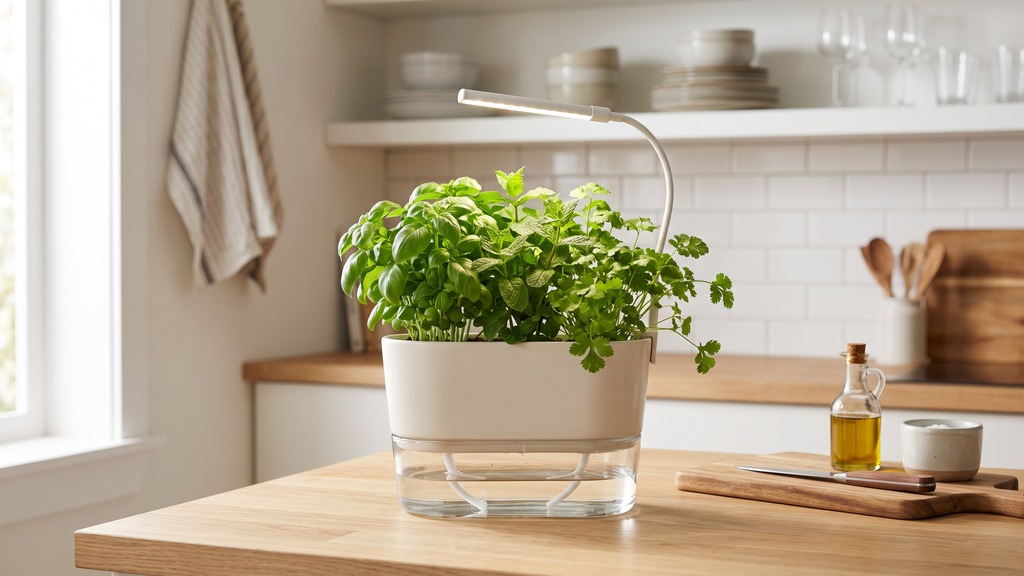
A structural solution combines the conditions herbs need every day: adequate root space, steady illumination, and controlled moisture. A compact planter with a built-in reservoir can reduce both missed watering and accidental overwatering, while a timer-based clip-on LED supports growth in low-light kitchens. For renters, a small countertop system also avoids bulky equipment and can use replacement pods when a crop finishes. Loamwell’s approach—ceramic planters, passive watering, supplemental lighting, and optional recurring herb refills—fits that model. It does not eliminate plant care, but it makes the routine simpler and more reliable for busy urban cooks who want fresh kitchen herbs without constant replacement.